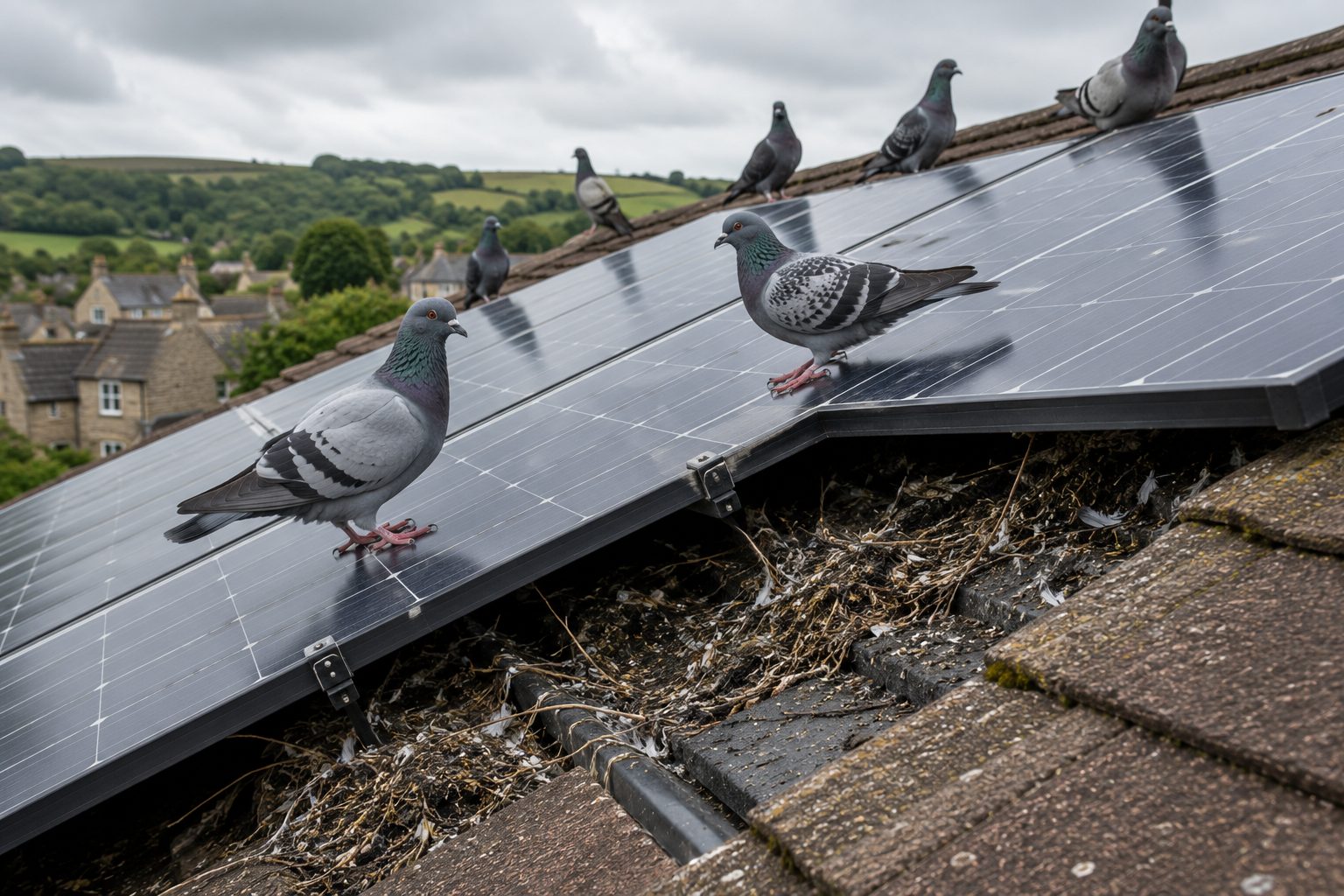
Clear nesting material carefully
Bird Nest Removal From Solar Panels
Tell us about the nesting beneath your panels.
Clear nesting material carefully
Tell us about the nesting beneath your panels.
Nesting material beneath solar panels can accumulate over several seasons, particularly where pigeons have been using the same protected space repeatedly. Twigs, feathers and debris may also work their way towards gutters and panel edges.
Nest removal needs to be approached carefully. Active nests and nesting birds can be protected by law, so providers first consider whether the material is old and inactive or whether birds are currently breeding in the area. Where removal is appropriate and access allows, nesting debris can be cleared before the solar panels are bird-proofed against future entry.
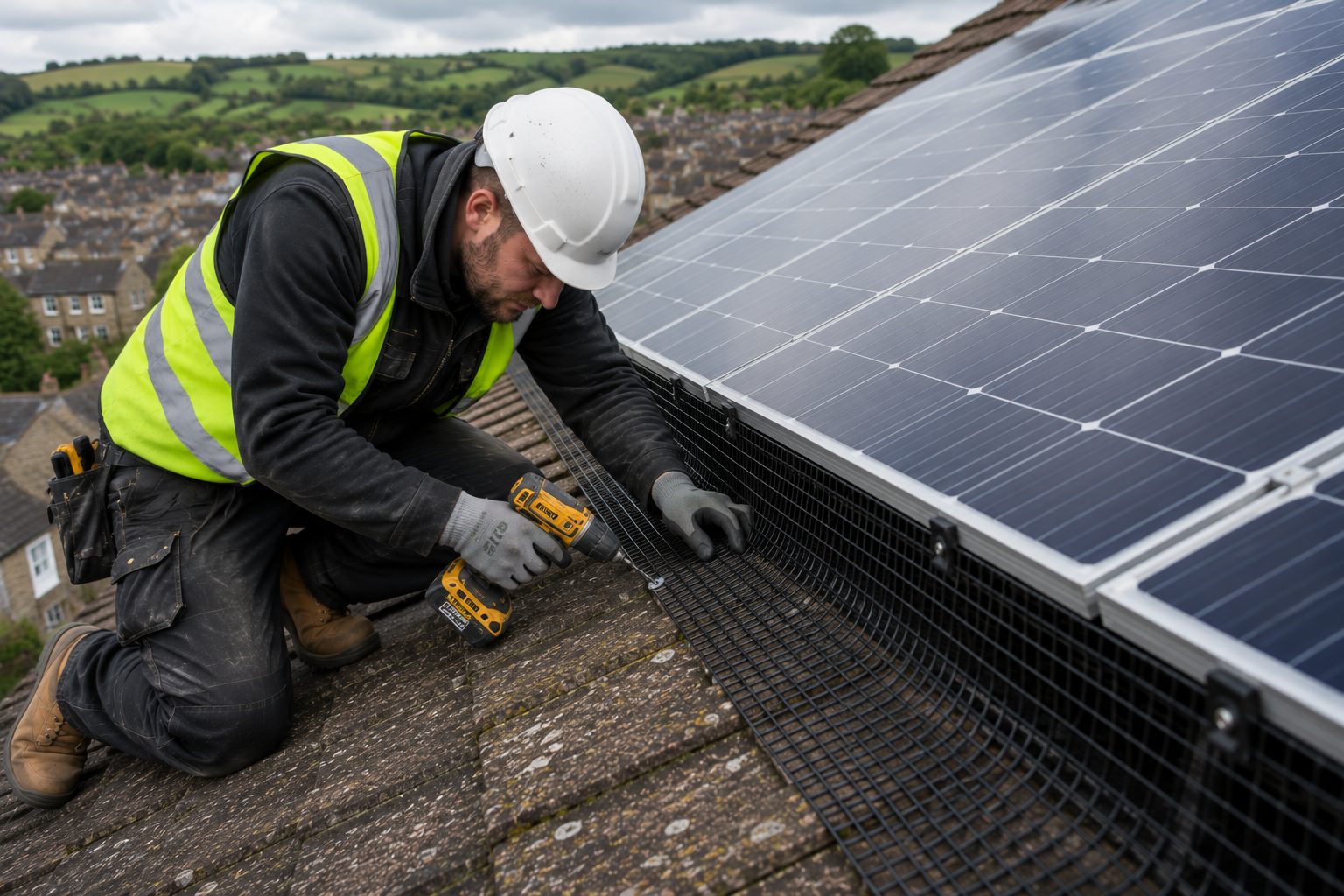
Removing old nesting material without stopping birds from returning often leaves the underlying problem unresolved. Providers' preferred approach is to assess the nesting situation first and, where appropriate, combine clearance with permanent exclusion measures.
Providers look for evidence that a nest may still be in active use before recommending clearance.
Old and inactive nesting material can be removed where it is safe, appropriate and reasonably accessible.
Accessible twigs, feathers and associated debris can be cleared from affected areas.
Providers identify how birds reached the nesting area and which panel edges need protection.
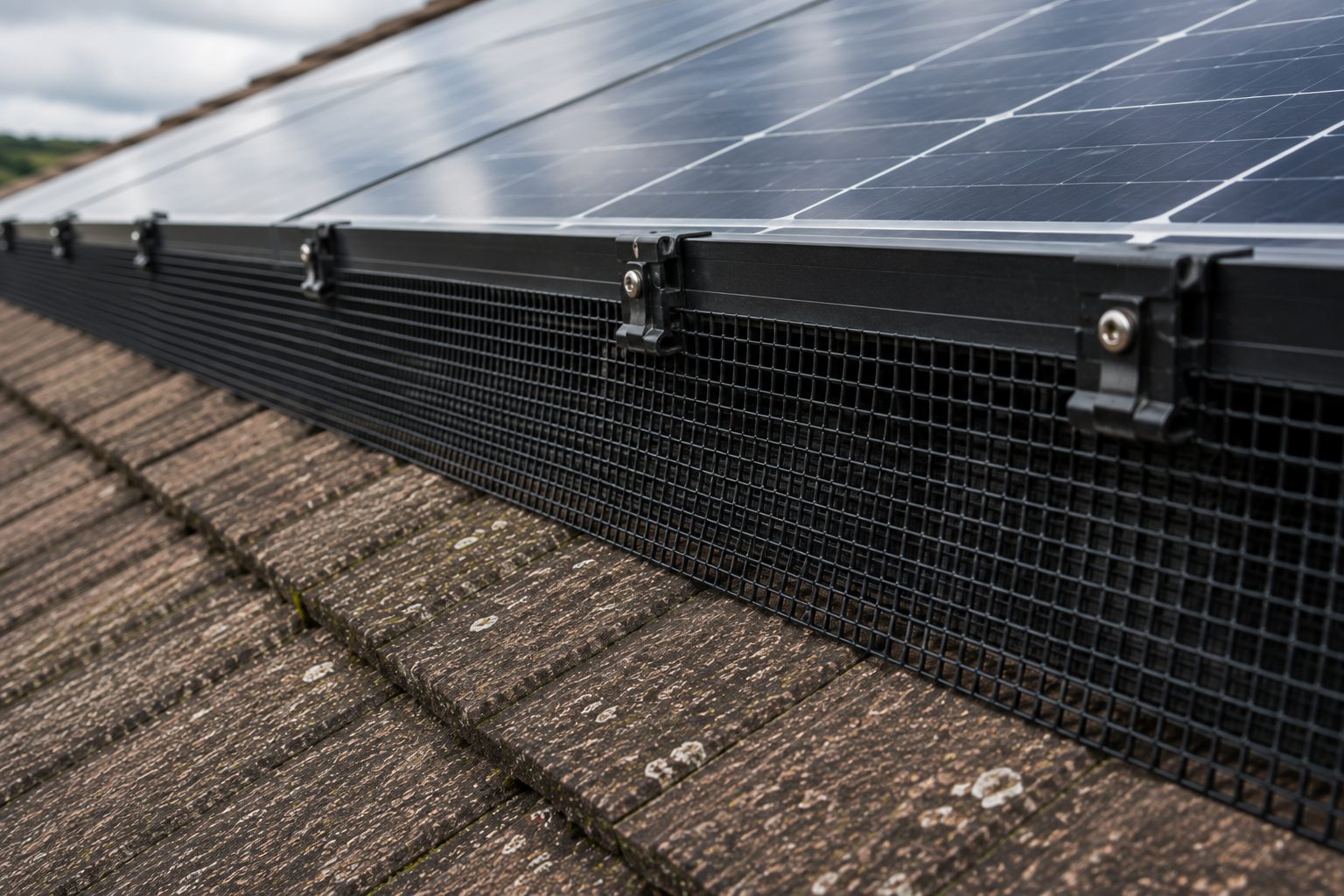
Once suitable, mesh can be installed around the array to help stop new nests being built beneath the panels.
| Service | Estimated Cost | Average |
|---|---|---|
| Light inactive nest clearance | £150–£300 | Around £225 |
| Clearance with standard bird proofing | £550–£850 | Around £700 |
| Heavy debris and complex proofing | £850–£1,400+ | Around £1,100 |
Guide costs depend on whether nests are active, roof access, the quantity of material, panel configuration and the bird-proofing work required afterwards.
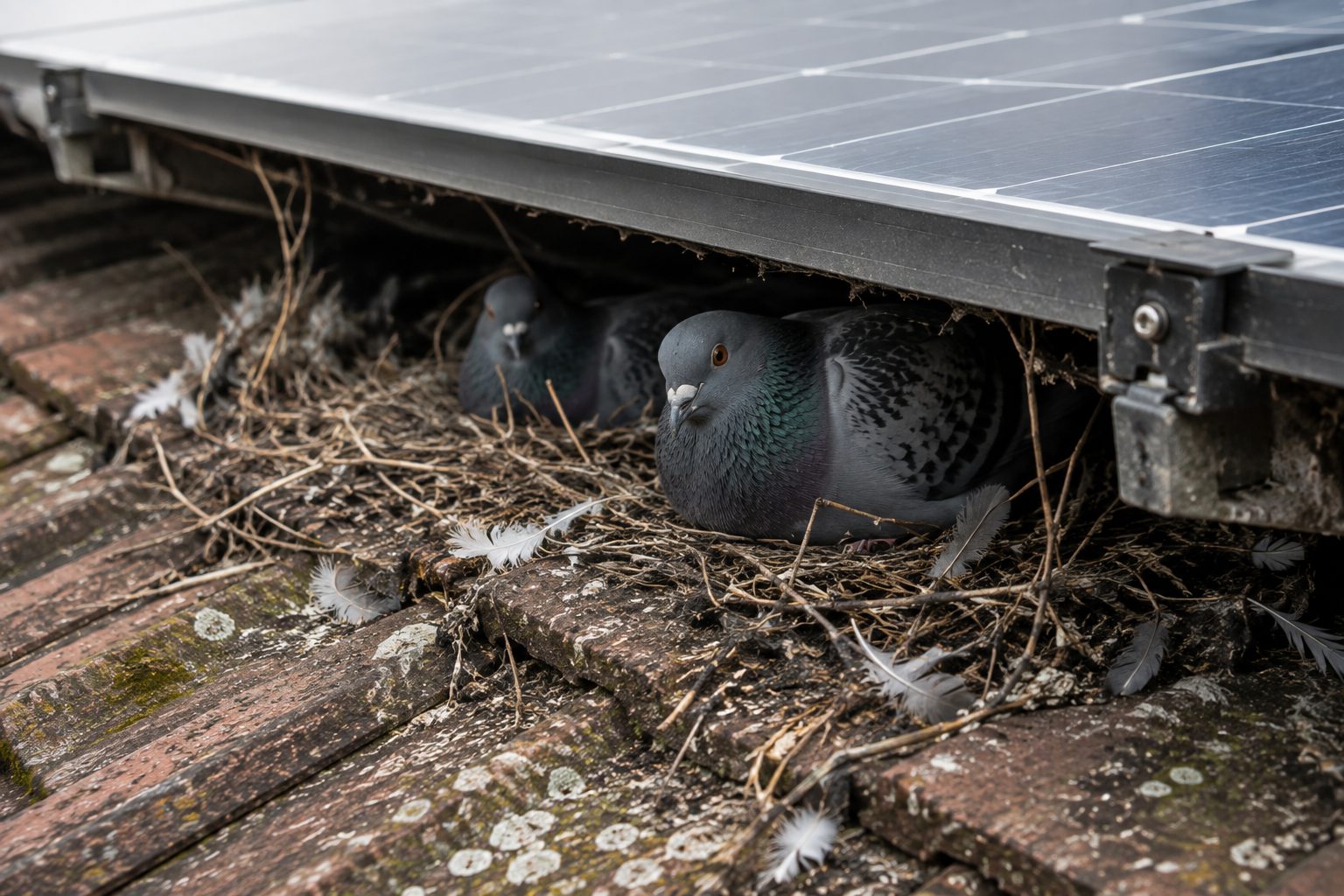
Providers consider whether nesting material appears active before recommending removal.
The aim is not only to remove old material but also to address how birds gained access.
Mesh can be installed after suitable clearance to reduce the risk of the same problem returning.
If work cannot appropriately proceed because of active nesting, providers explain the situation.
Concerned about nests beneath your solar panels? Tell us what you've found.
Free — no obligations
Providers establish whether birds are currently nesting or whether the material appears old and inactive.
Providers inspect what parts of the nesting area can be reached safely around the solar array.
Appropriate inactive nesting debris is cleared where practical.
Providers identify the exposed panel edges birds have been using.
Where requested and suitable, bird mesh is fitted to help stop future nesting beneath the array.